

Teaching English abroad is often framed as an opportunity to travel and explore while gaining professional experience. And for many people, that’s really all they need.
I remember early in my career, I was so excited by the adventure of teaching abroad that I accepted casual jobs that would demand more than what they paid. But after a few years, I started noticing that even though my friends and I were teaching similar subjects, there was a major difference between our benefits because of how our roles were classified.
Language Support vs Institutional Investment
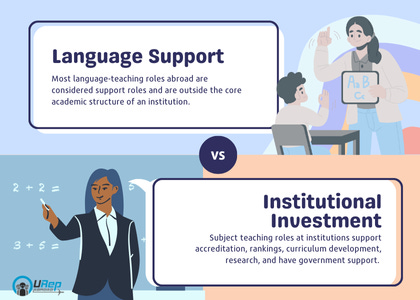
Most English teaching roles are considered language support. That classification places “support roles’ outside the core academic structure of an institution, which can lead to more flexible requirements, limited assistance in adapting to a new environment, and minimal benefits.
Subject teaching roles are usually classified as institutional investments. These roles support accreditation, rankings, curriculum development, research, and have government support. Institutions budget differently for “subject teaching, and that distinction quietly determines:
Salary structure
Visa class
Family sponsorship
Contract renewal
Legal protections
What You Can Learn From Job Descriptions
If you know where to look, a job description tells you everything you need to know about a teaching role and the value the employer places on its candidates. While support teaching roles highlight hours per week, pay rates, and flexibility, institutional roles emphasize salary ranges, benefits packages, qualifications, and professional development.
The benefits reflect how the institutions justify their teaching roles to the government, and many educators don’t know that benefits are often determined by visa category and institutional status. Government-recognized institutions can:
Sponsor dependents
Offer parental leave
Provide long-term housing
Enroll children in affiliated schools
It’s not to say other organizations can’t offer these benefits; it’s just harder to justify.
English teaching is great for getting started and creating a short-term option. But if you want a more scalable career option, identifying strong job descriptions and asking the right questions can help filter out the “support” roles.
And if you’re still struggling to tell the difference, I’ve created a Career Role vs. Teaching Gig Checklist (with notes!) to help you spot red flags in any job description in under 3 minutes.
—
If you want help building a career in international education, follow me on YouTube and TikTok to stay informed.